
Freight doesn’t wait. And it’s always throwing curveballs.
It breaks. It reroutes. It changes at the last minute. And too often, the software running it does the same.
In 2025, we focused on making your freight operations more predictable, even when the freight industry itself remains unpredictable.
That means fewer brittle workflows. Less manual cleanup. More control where it actually matters for driver pay, enterprise execution, data integrity, and security.
This year, we shipped foundational improvements designed to help carriers and brokers:
- Protect margins
- Win and retain contracted freight
- Move faster with fewer clicks at scale
- Execute accurately when plans change
Here’s a look at the most meaningful product investments we made in 2025 and why they matter:
Empower your back office staff with faster settlement processing
Accurate settlements aren't just back-office tasks; they're retention and relationship strategies. Manual processes create errors, delays, and mistrust. In a market where drivers and reliable carriers are harder to find, late or inaccurate settlements is a self-inflicted wound.
In 2025, we invested in settlements across both driver and accounts payable workflows:
Driver Settlements: Complete settlements faster, accurately, and on time
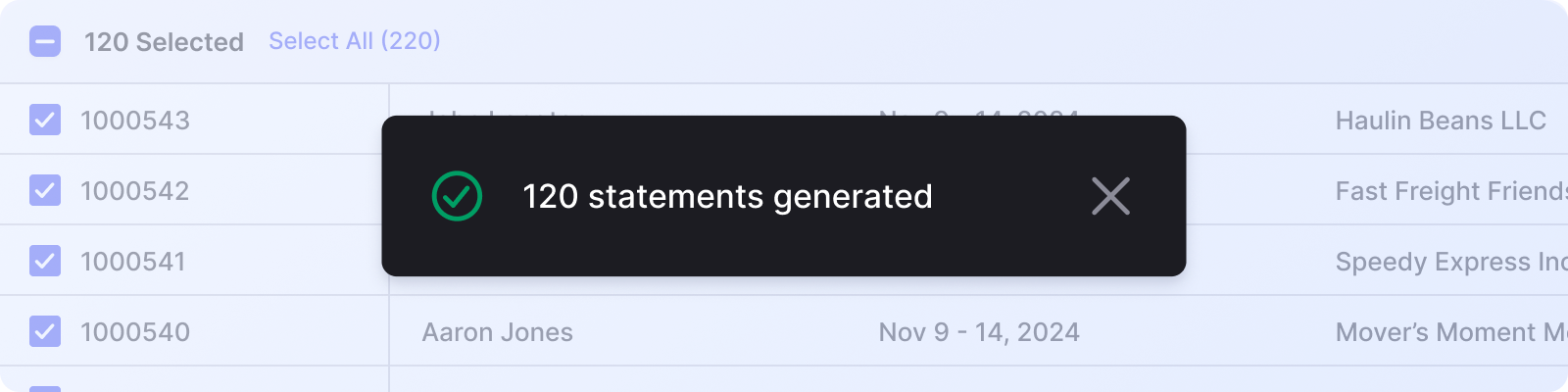
We replaced the legacy Pay Drivers module with Driver Settlements, a system built to handle settlements at scale.
What’s different:
- Drafts: Review and collaborate before finalizing to catch issues early.
- Bulk workflows: Generate, approve, and email multiple settlements at once.
- Pay periods: Built-in guardrails ensure consistent timing and accuracy.
Impact: Early users of Driver Settlements are completing driver settlement cycles 13% faster, with fewer errors and better driver satisfaction. That’s less rework for your team and fewer reasons for drivers to look elsewhere.
Alvys customers, view the help article here.
Carrier Settlements: Streamline accounts payable for brokerage operations
For teams managing external carrier payments, we launched Carrier Settlements to automate reconciliation and reduce manual accounts payable work. The SuperSettle View centralizes trip documents and payables, simplifying reconciliation and improving settlement accuracy.
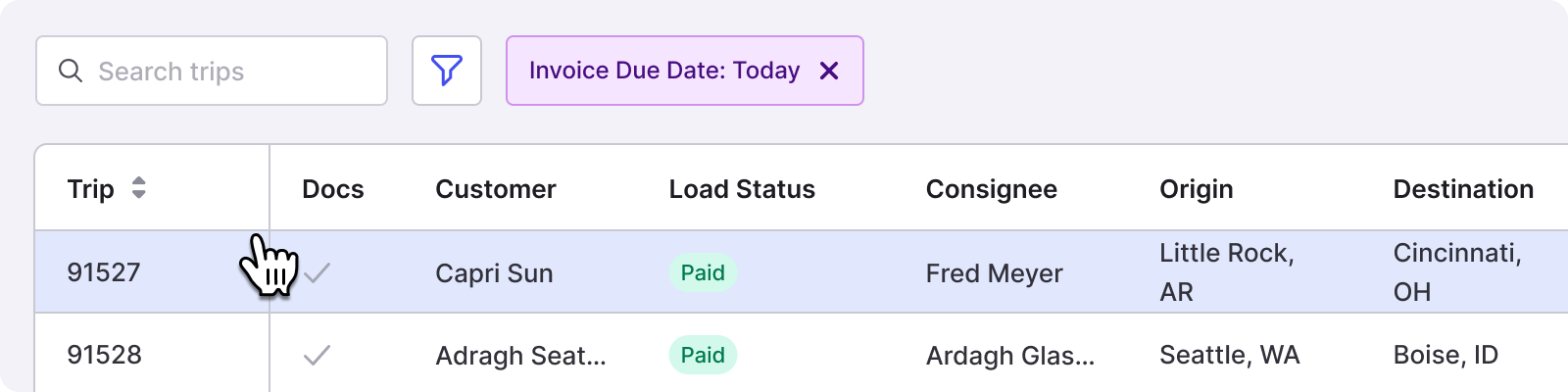
Impact: Consolidating all settlement workflows into Alvys eliminates system switching and creates efficiency gains, especially when paired with our document audit functionality, which catches discrepancies before they delay payments or create disputes.
Alvys customers, view the help article here.
Grow your book of business with confidence with our rebuilt native EDI, the Alvys Marketplace, and AI-powered rate con upload
Growing your book of business isn’t just about moving more freight. It’s about executing reliably at enterprise scale to onboard shippers quickly, handle change cleanly, and protect scorecards when volume increases.
Alvys Native EDI, Faster and More Reliable: Win new business, onboard faster, reduce tender exceptions, protect scorecards
EDI remains the backbone of enterprise freight communication, but too often it’s fragile, expensive, and disconnected.
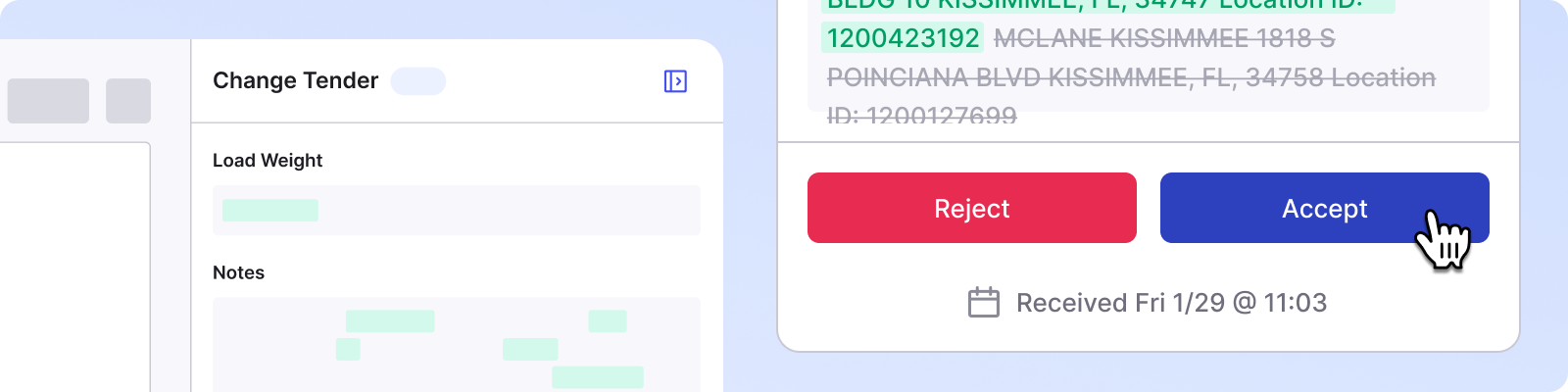
In 2025, we rebuilt Alvys Native EDI from the ground up to remove the friction that slows enterprise growth. The focus was simple: faster onboarding, fewer tender exceptions, and cleaner execution inside the workflows your team already uses.
What this unlocks
- Faster EDI setup = Faster revenue: Start with proven shipper mappings, instead of custom development, to launch EDI in weeks, cut integration costs, onboard faster, and turn on revenue sooner.
- EDI inside your workflow: Tender changes automatically update loads, dispatch, billing, and settlements in your workflow, so your team stays aligned without chasing updates and discrepancies.
- Cleaner execution, strong scorecards: Fewer tender errors and exceptions mean more predictable ops and stronger shipper scorecard results.
- Visibility without overexposure: Meet shipper visibility requirements without exposing more of your operation than necessary.
Impact: Native EDI helps win and retain business, not just “support” it. In a recent customer survey, 63% of customers actively pursuing contracted freight using Alvys' native EDI win new customers within their first 12 months of switching to Alvys, with over half landing 3+ shipper contracts during this time.
With the foundation in place, 2026 is about accelerating enterprise activation and becoming the fastest, most reliable EDI platform in freight. We’re cutting onboarding time, scaling reusable shipper mappings, and expanding reusable EDI mappings, all while applying AI and automation to reduce exceptions without taking operators out of the loop. Reliability, speed, and control are the new standard.
Alvys customers, view the help article here.
Alvys Marketplace: Access the Alvys network + the most popular load boards in one workflow
We launched Alvys Marketplace to bring load discovery into Alvys.
Inside Alvys Marketplace, you can access the most popular load boards in one place, post and bid on loads in a single workflow, and keep execution moving without switching systems.
You’ll also discover the Alvys network — a high-quality community of carriers and brokers who already run on Alvys — designed for discovering new business relationships to build repeatable lanes with partners who match your standards for data quality, communication, and reliability.
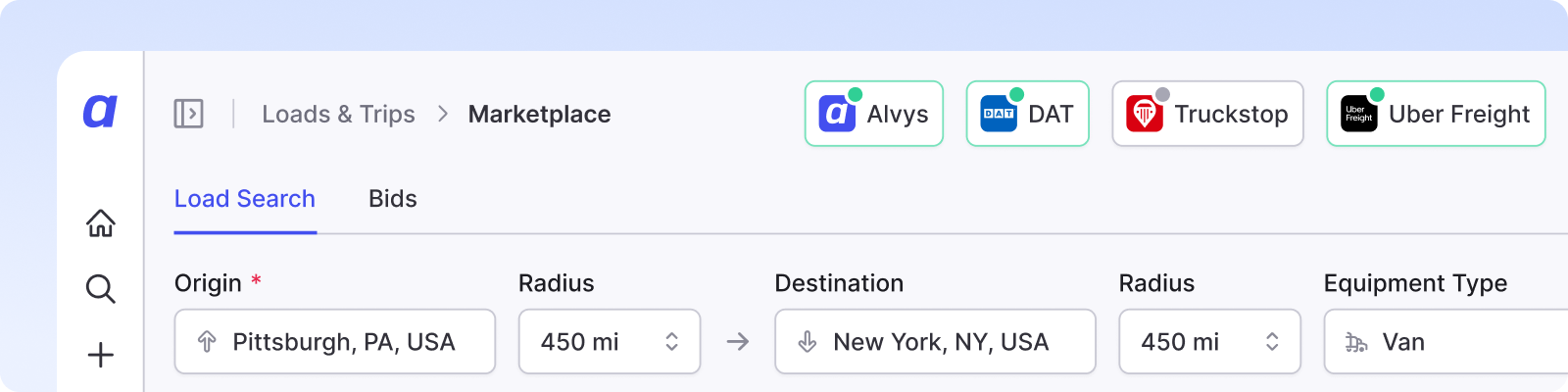
Alvys Marketplace gives you:
- Alvys network: Post and bid with high-quality carriers and brokers already on Alvys.
- Top load boards in one place: Access the most popular load boards in the industry without leaving Alvys.
- Connected workflow: Tendering, updates, billing, and settlement flow without switching systems or double entry.
Early signal: 100+ Alvys customers are actively collaborating across the network, strengthening relationships, moving more profitable freight, and accessing higher quality capacity as the ecosystem scales.
Alvys customers, view the help article about the Alvys internal Marketplace here.
AI-Powered Rate Con Upload: Book and process freight faster
Speed matters when competing for freight. The faster you can process rate cons, validate documents, and turn around quotes, the more loads you win.

In 2025, we deployed AI automation to eliminate your manual data entry and help you process freight faster:
- Rate Confirmation reader with 40%+ accuracy improvement: Our enhanced AI model extracts load details from rate cons with significantly better accuracy, reducing manual cleanup and downstream exceptions.
Impact: Faster load creation means more capacity to quote and book freight. Cleaner data upfront means fewer billing disputes and faster cash flow. Teams spend less time fixing errors and more time moving loads.
In 2026, we'll expand our document intelligence engine and integrate it directly into AP/AR workflows; catching errors before they impact billing, settlements, or customer relationships.
Configure and customize Alvys to fit the needs of your unique operation
Every freight operation runs differently. Requirements, billing rules, pay policies, and internal workflows vary by customer, lane, and fleet. In 2025, we expanded how you can configure Alvys to match real-world processes, so you capture cleaner data upfront, strengthen integrations, and reduce exceptions in billing, settlements, and reporting.
Public API: From read-only to fully-actionable, so you can connect your systems and automate repetitive work
In 2025, we overhauled the Alvys Public API to support real operational workflows, not just data access.
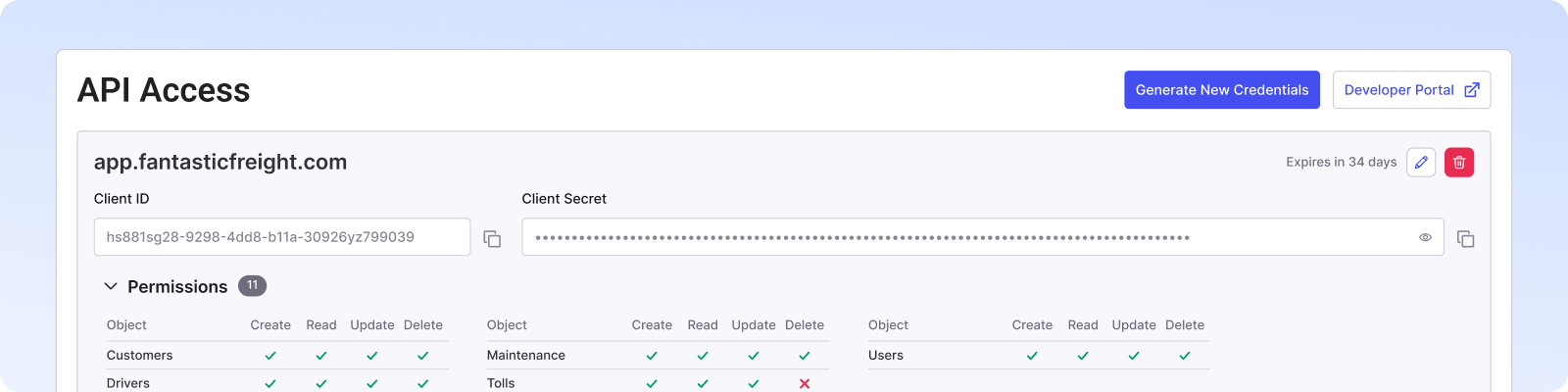
What’s new
- Create, update, and modify core objects, not just read them.
- New reporting endpoints to power enhanced analytics and dashboards.
- Early-access webhooks for real-time events and automation.
- A clearer, more complete developer experience for internal tools and partners.
This enables teams to automate workflows end-to-end while keeping Alvys as the source of truth.
Recent highlights
- Inbound Tender API: Seamlessly automate freight tender handling between Alvys and external middleware or custom systems. Built on REST/JSON with webhook support, and aligned to core EDI standards (204, 990, 214, 210). Alvys customers, view the help article here.
- Google Sheets Connector: Pull live Alvys data into Google Sheets so operations and finance teams can build real-time, no-code reports with zero code and zero extra software. Alvys customers, view the guide here.
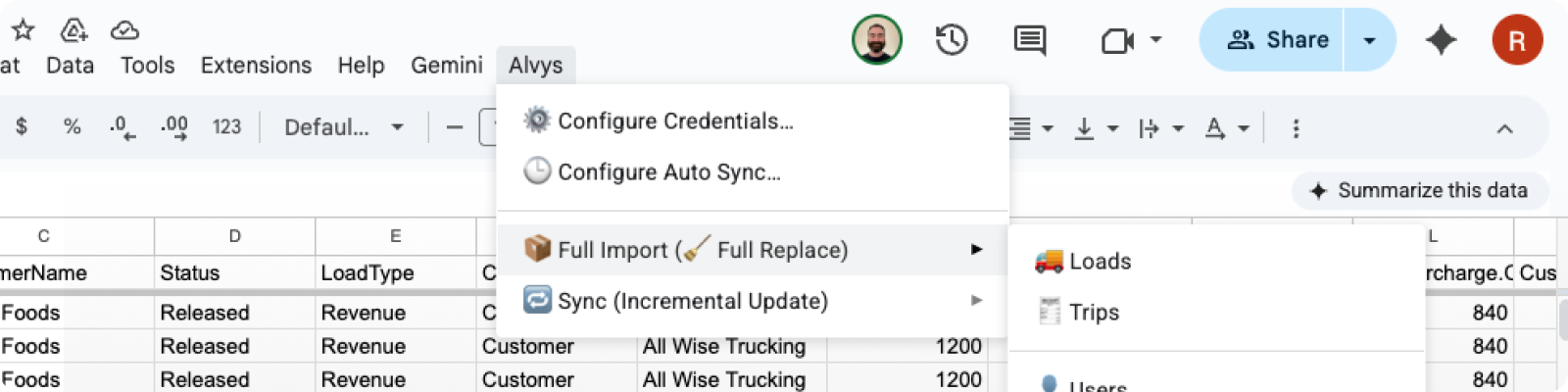
Impact: Customers are reducing manual handoffs, automating repetitive work, and building differentiated experiences on top of Alvys, while keeping execution, billing, and settlements fully aligned.
Custom References for Loads, Trips, and Stops: Capture and display the data that matters
When critical operational details live in notes, emails, or spreadsheets, everything slows down. Dispatch gets messy, billing is delayed, and settlements require manual cleanup.
Custom References let you define and capture the specific data your operation needs at the load, trip, and stop level. Create up to 20 custom fields to capture details such as customer POs, billing codes, project IDs, lane tags, or stop-specific instructions. You decide exactly which Alvys pages and documents display your custom data: including Dispatch Planner, custom reports, the mobile app, and specific external-facing documents such as rate cons and BOLs.
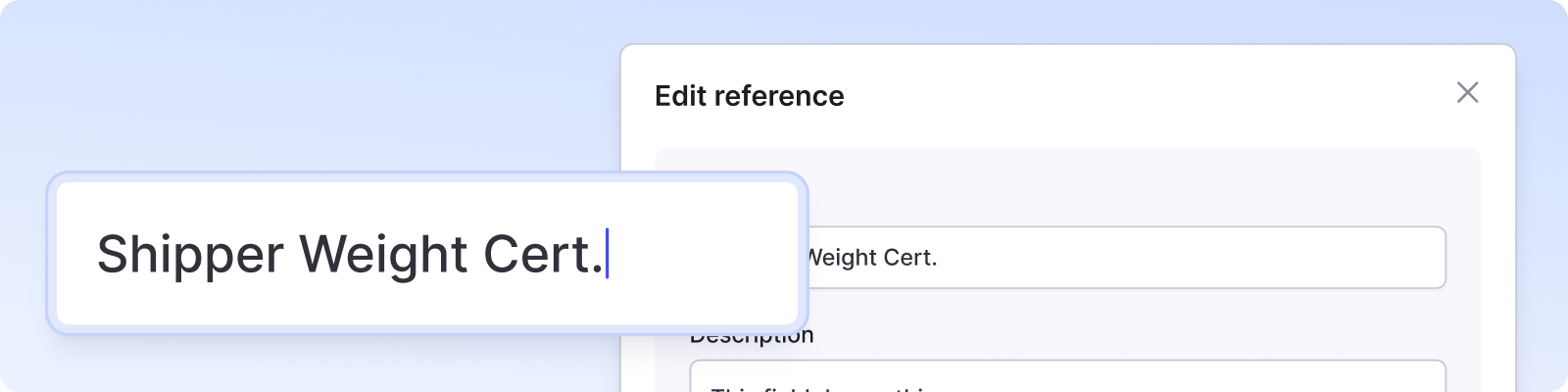
What this means:
- Cleaner operations: Standardize what's recorded at the load, trip, and stop level to fine-tune Alvys to your operation's unique needs.
- Faster billing: Auto-fill references on rate cons and BOLs to reduce disputes and rework.
- Right data, right place: Control exactly where custom references appear, so teams see what they need without the clutter.
Impact: Capture data once, use it everywhere; reducing manual reconciliation, speeding up billing, and giving teams clearer operational visibility.
Alvys customers, view the help article here.
Waypoints: Cleaner trip data for non-revenue stops
Waypoints give teams a simple, structured way to log non-revenue stops (fuel, border crossings, rest, yard moves, asset transfers) right in the load timeline. Drivers check in/out and submit e-checks just like a revenue stop, keeping compliance clean and workflows fast.
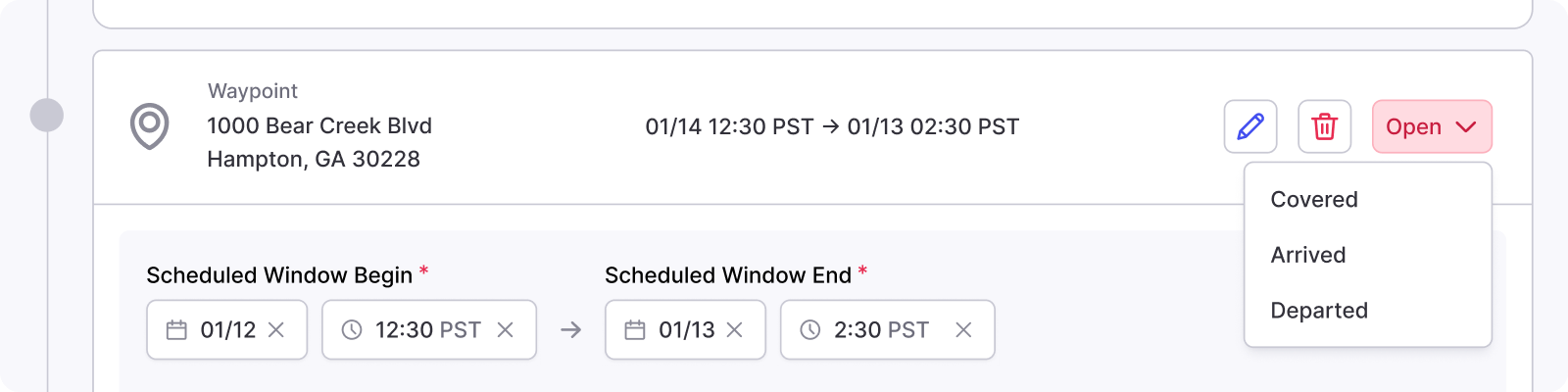
This visibility gives you:
- More accurate mileage for driver pay and asset tracking
- Cleaner dispatch planning and stop sequencing
- No more manual workarounds to model fuel, rest, or operational stops
Impact: Capture how freight actually moves for better routing, smarter optimization, and fewer gaps in trip data.
Alvys customers, view the help article here.
Get security & reliability that’s built for freight
Freight doesn’t pause for security incidents, internet instability, or account compromise, and neither do we. In 2025, we strengthened Alvys so your operation stays protected and available, even as your teams work across regions and time zones.
What this means for you
- Always-on protection: We automatically blocked 24,000+ malicious attempts — reducing fraud risk and preventing disruption before it reaches your team.
- Global-ready operations: Alvys now supports secure access across 100+ countries, reflecting how modern logistics teams actually operate.
- Stronger access controls: Improved authentication, expanded MFA coverage, and tighter account safeguards help ensure the right people have the right access.
- Protected data by default: Expanded encryption and data protection controls to safeguard sensitive operational and financial information.
- Proven controls: Completed SOC 2 Type I, with SOC 2 Type II on track for Q1.
Security isn’t a feature we “add.” It’s a foundation we keep strengthening so you can run freight with confidence today, and scale safely as we add more automation and AI in 2026.
2026: Faster execution, fewer exceptions, more control at scale
In 2026, margins will be earned by teams that execute freight with fewer errors, fewer exceptions, faster cash cycles, and better asset utilization. The industry wants smarter operators, not black-box automation. The real blockers are data quality, fragmented systems, and disjointed workflows that don’t match freight reality.
Alvys was built by a team that comes from the freight industry. We understand the workflows because we've lived them. That perspective shapes everything we build: tools designed around how freight actually moves, all on a single connected platform.
And the network is scaling fast. Carriers, brokerages, and shippers are already working together inside the Alvys ecosystem, forming real commercial relationships, tapping into higher-quality capacity, and moving more profitable freight across the network.
Our focus is simple: build AI that actually works for freight execution and put better tools in your hands. A more connected network means better insights. Better insights help your team work smarter and protect your margins.
Dispatch Assist: AI does the math. Dispatch makes the call.
Dispatch decisions often depend on experience and tribal knowledge, which can make it easy to miss utilization and margin opportunities. Dispatch Assist provides AI-powered recommendations for your assets and trips, with clear reasoning, so your dispatcher can quickly evaluate the best options.
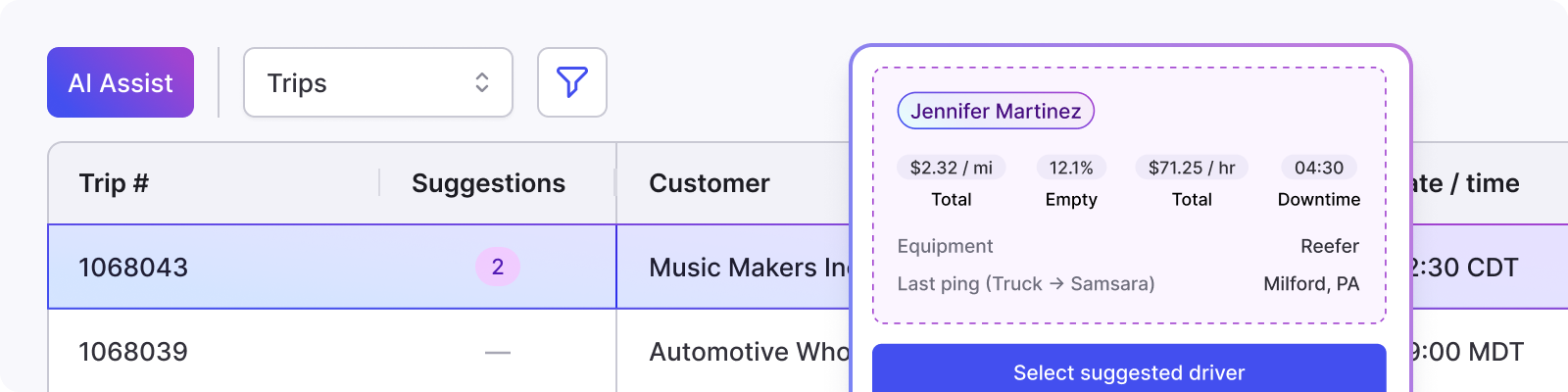
Your dispatchers stay in control: They review the recommendations, make the final assignment, and help train the system in real-time.
Now in beta with select customers, Dispatch Assist will roll out broadly in 2026, giving every dispatcher the capacity to manage more assets without losing control or burning out; helping teams scale operations without scaling headcount.
Custom and Agentic Reporting: From insights to action.
Traditional TMS reporting often means static dashboards, manual exports, and hours spent hunting for insights across disconnected systems. Agentic Reporting is a fundamental overhaul, bringing enterprise-grade analytics and visualization directly into Alvys. Build fully customized reports tailored to your organization's unique needs, without hiring a dedicated BI team or bolting on additional software.
Our chat-based interface also lets you query your data in plain language: "Which lanes had the lowest margin last month?" or "Alert me when a carrier's on-time rate drops below 90%." You get answers instantly, with the power to drill down and visualize - all without leaving Alvys.
Soon in Beta, Agentic Reporting lays the foundation for what's next: Alvys agents that don't just surface insights, but also execute your commands and take action on your behalf.
Cheers to 2026
Freight will keep changing. Our focus stays the same: Accelerate processes, reduce rework, eliminate exceptions, expedite billing and settlements, and help teams improve utilization without adding headcount.
Thanks to every carrier, broker, and ops team that helped us build and pressure test these releases in 2025. If you want to see how these updates fit your lanes and workflow, we would love to walk through it with your team.

